In Poland, a notary’s signature and seal on a notarial document must be authenticated by the relevant regional court before MSZ issues an apostille.
What is authenticated before an apostille?
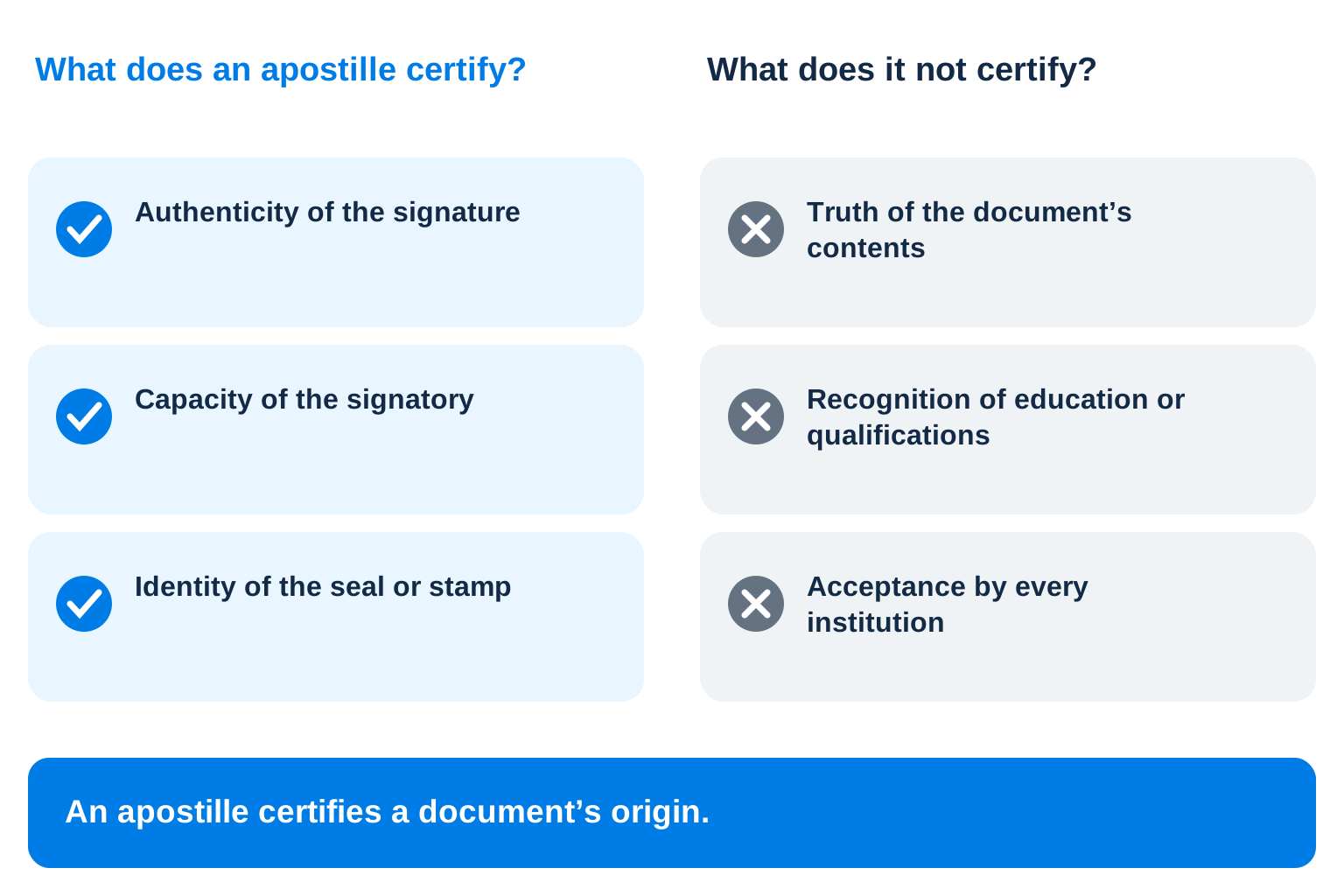
The Warszawa-Praga court instructions cover authentication of a notary’s signature and seal within the court’s territorial jurisdiction. This check neither establishes the truth of the original document’s contents nor produces a new translation.
Uwierzytelnienie is the Polish term for authentication. It covers different procedures and endorsements according to the document and institution. Where required, prior authentication precedes the separate apostille stage.
Original, copy or translation?
An original, a notarised copy and a translation may require different preparation. Establish which version the recipient requires before arranging authentication.
Read all pages, including attachments and separate certification sheets: they may record different actions. Find the issuing authority’s name and the signatures beneath the certification statements. The guide to where to get an apostille for your document identifies the responsible authority; prepare the document according to its instructions.
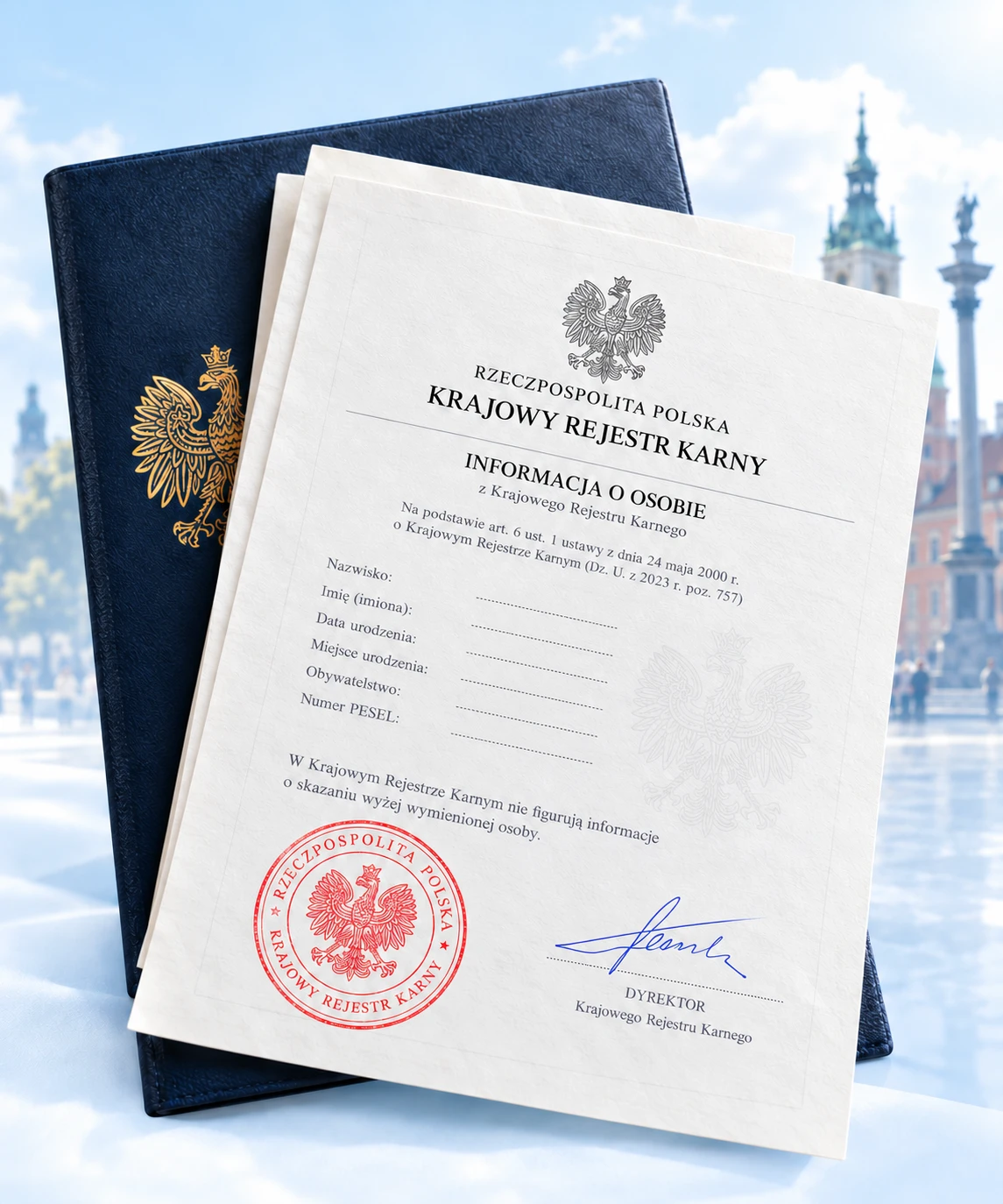
Preparing a Polish notarial document
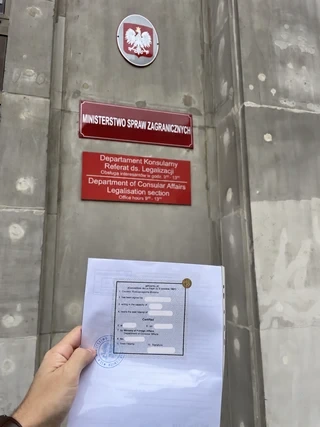
For a Polish notarial document, the official instructions from Poland’s Ministry of Foreign Affairs require authentication at the relevant regional court before submission to MSZ for an apostille.
The notary’s name and place of practice identify the responsible regional court (sąd okręgowy). Follow that court’s application instructions for authentication of the notary’s signature and seal.
For a power of attorney, see the arrangements on the power of attorney apostille page.
Court documents follow a separate procedure. This notarial example cannot automatically be applied to every stamped document or every court document.
| Stage | What to do | Result |
|---|---|---|
| Check the notarial document | Identify the notary, their place of practice and the document type. | You know which notarial act the signature relates to. |
| Prior authentication | Apply to the competent regional court following its instructions. | The notary’s signature and seal are authenticated. |
| Apostille | Take the document, after the court stage, to MSZ. | MSZ issues the apostille for that document. |
| Preparation for the recipient | Ask which language, translation and form of submission are required. | You have the papers in the form agreed with the recipient. |
When is additional authentication required?
For other documents, preparation depends on the document type and issuing institution. Follow the instructions of the authority that will issue the apostille.
NAWA has its own rules for documents from Polish higher education institutions. OKE Poznań issues apostilles for that examination board’s documents. These authorities handle different categories; a diploma does not have to pass through all of them in turn.
Before paying for additional authentication, obtain an explanation of the action, the signature or seal concerned and the official instruction requiring it for your document. Instructions for another country or document type do not justify an extra paid stage.
Understanding existing endorsements
A certified true copy confirms that the copy matches the original. It does not, on its own, establish that a signature has been authenticated or that the document is ready for the chosen apostille procedure.

For work already completed, record the original signature, notarial formalities, prior authentication, apostille and translation, with the person or authority responsible and the location of each endorsement. Not all these stages are compulsory.
Ask the authority or professional who added an unclear endorsement to explain what was authenticated and whose signature it concerns. Do not add details or sheets yourself.
When the authority cannot accept the document
Ask the authority why it cannot accept the document before resubmitting it. Its answer needs to cover its competence to handle that document category, suitability of the form supplied (original, copy or translation), the unmet requirement and the correction required. If a signature is at issue, the answer needs to identify it and say whether further authentication is necessary.
If referred to the issuer or asked for a duplicate, obtain the requirements for the replacement before ordering it. A later issue date alone may not resolve the problem.
Pass the authority’s exact reply to the next person handling the document, so that you can discuss the correction using its stated reason.
Before sending the document on
These entries concern the papers you will submit. If you replace an original with a copy or obtain a new certification, recheck the affected entries: answers about the earlier version may no longer apply.
| What to check | What to record |
|---|---|
| Document and origin | Exact title, country and issuing authority |
| Signature and document form | Signatory’s position; original, copy or translation |
| Subject of the next check | Which signature or seal is being authenticated |
| Authority issuing the apostille | Name and link to current instructions |
| Preparatory stage | Required / not required / not yet established; basis for the answer |
| Who carries out the preparatory stage | Authority and its confirmed competence for this case |
| Completion of the stage | Which details and endorsements must be present |
| Unresolved question | Who has been asked and which answer is awaited |
If prior authentication is already complete, the next stage is applying for an apostille. Agency arrangements are described on the Polish document apostille page.
If the next step after authentication is submission to MSZ, see how to book an apostille appointment at MSZ.
What to write to the authority
I intend to submit [form of document] for an apostille. The document is [exact document type], issued by [authority, country] and signed by [position]. Is prior authentication required? If so, which authority carries it out, what does it authenticate and which details show that the stage is complete? Please send the current instructions for this document category.
Use the contact details on the authority’s official website and write in a language it accepts. Do not post personal identification numbers or complete document copies in public comments or public forms.
Already have a translation? Read when to obtain an apostille in relation to translation before ordering more work. Your submission may require a different sequence.
Help with preparing your document
If the document has several endorsements or you have received comments from an authority, explain the situation to Translate Service. We will help identify what needs clarification before proceeding and agree translation arrangements. You can start with a description of the task or one document; we will then establish which documents are required.